Burning Grassland
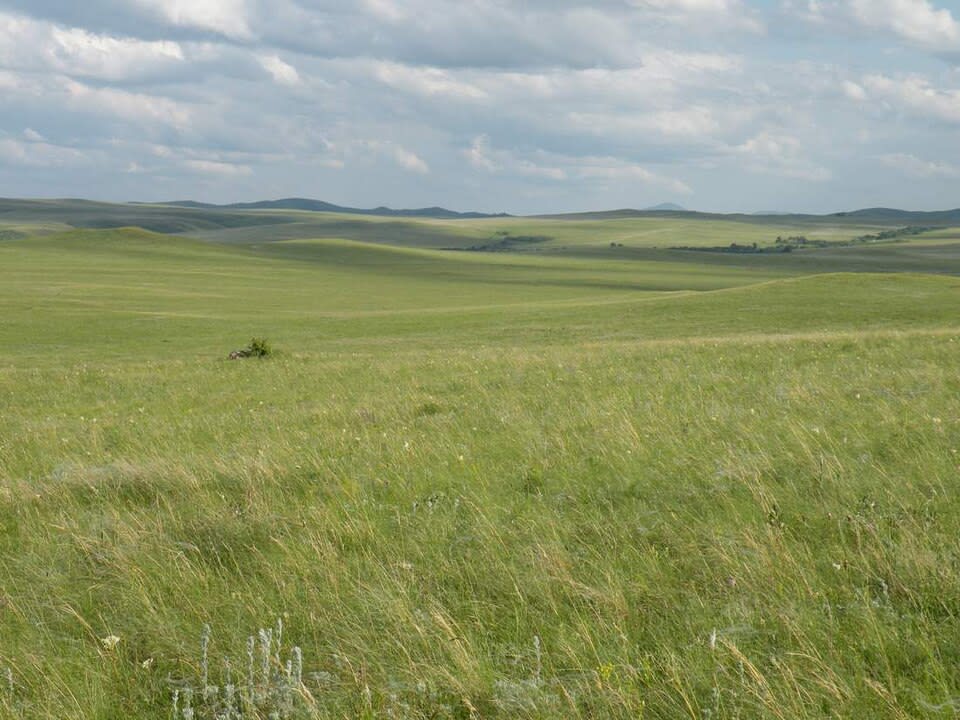

Fire has taken the land and will not let go. Volcanoes smoke on the horizon, lava runs in the cracks and ash falls like grey snow. The ground is warm underfoot, and at night the hills glow red. Open steppe and prairie under a huge sky, hot in summer and swept by cold winds in winter. Few trees, much grass: a land for herders and riders, where a traveller is seen from far away.
Over the year it averages 8 °C.
Hear it
- Volcano: Volcanic Field (In the album RPG Ambiences Vol. 2)
- On foot: Walking in a Volcanic Field (On Patreon, Guardian tier)
- In a storm: Thunderous Volcanic Field (On Patreon, Guardian tier)
- Lava: Lava Plains (On Patreon, Guardian tier)
- In the wind: Lava Windy Plains (On Patreon, Guardian tier)
- By day: Grasslands (On Patreon, Raven tier)
- On foot: Walking in the Grasslands (On Patreon, Guardian tier)
- At night: Grasslands Night (On Patreon, Raven tier)
- A meadow: Meadow (In the album RPG Ambiences Vol. 8)
- In the dry season: Dry Prairie (In the album RPG Ambiences Vol. 7)
- Horses: Horses in Grasslands (On Patreon, Guardian tier)
- By the river: River in Grasslands (On Patreon, Raven tier)
- In a storm: Plains with Distant Thunder and Animals (On Patreon, Guardian tier)
- At camp: Campfire in Meadow (In the album RPG Ambiences Vol. 8)
- Bitter cold: Strong Snowy Wind (On Patreon, Guardian tier)
- Strong wind: Strong Wind (On Patreon, Guardian tier)
- Wildfire: Burning Forest (In the album RPG Ambiences Vol. 2)
For the table
- Ground
- open, about 30 km a day on foot
- Seasons
- -8 °C in the heart of winter, 22 °C in the heart of summer
- Water
- by season
- Foraging
- poor
Hazards
- Bitter cold. Without furs, a fire and shelter at night, the cold numbs, then kills. Frostbite takes fingers and toes first.
- Strong wind. Steady wind tires walkers, blows out fires and, on sand or snow, blinds and buries the track.
- Wildfire. In the dry season, grass and scrub burn fast, driven by the wind. A fire front outruns a person on foot.
- Searing air. The heat rises from the ground as much as it falls from the sun, and it does not ease at night.
- Ember rain. Gusts carry glowing embers and hot ash. Cloth, hair and dry packs catch at a touch.
- Crusted lava. A black crust over a river of lava looks like any other rock until it cracks.
D&D 5e
- Plays as
- grassland, fast pace at most
- Checks
- forage: Survival DC 15 · find the way: DC 5 · search: DC 15
- Creatures are spotted at
- 6d6 × 10 ft
- Bitter cold. At −18 °C (0 °F) or colder, anyone exposed makes a DC 10 Constitution save at the end of each hour or gains 1 Exhaustion. Cold resistance passes automatically; sleeping in a bedroll does too, and a blanket gives Advantage.
- Strong wind. Disadvantage on ranged weapon attacks; open flames go out and fog clears; a flyer must land at the end of its turn or fall. In a desert it can raise a sandstorm: Disadvantage on Wisdom (Perception) checks.
- Searing air. At 38 °C (100 °F) or hotter, a creature exposed without drinkable water makes a Constitution save at the end of each hour, DC 5 and then 1 higher each hour, or gains 1 Exhaustion level. Medium or Heavy armor gives Disadvantage; Fire resistance or immunity passes automatically.
- Ember rain. A creature on fire takes 1d4 Fire damage at the start of each of its turns. It can spend an action dropping Prone and rolling to put itself out; dousing, plunging into a liquid or smothering the flames does it too.
- Crusted lava. (House rule) A DC 14 Wisdom (Survival) check spots a crust before the party crosses it. A creature that breaks through makes a DC 13 Dexterity save, taking 6d10 Fire damage on a failure, or 2d10 on a success as it scrambles out.
This work includes material from the System Reference Document 5.2.1 ("SRD 5.2.1") by Wizards of the Coast LLC, available at https://www.dndbeyond.com/srd. The SRD 5.2.1 is licensed under the Creative Commons Attribution 4.0 International License, available at https://creativecommons.org/licenses/by/4.0/legalcode.
Pathfinder Second Edition
- Plays as (Pathfinder Second Edition)
- plains, open terrain, about 32 km a day at Speed 25
- Checks
- Subsist: Survival DC 15 · Sense Direction: Survival DC 15
- Random encounters
- flat check DC 12 each day
- Bitter cold. Temperature bands (GM Core p. 95): at 0 °C to −11 °C (mild cold) travellers tire after 4 hours; at −11 °C to −29 °C (severe cold) they also take minor cold damage (1d6 to 2d6) every hour; at −29 °C to −62 °C (extreme cold), every 10 minutes. Cold-weather gear removes severe-cold damage and turns extreme cold into severe. A soaked traveller counts the band one colder.
- Strong wind. Wind gives a –1 to –4 penalty to Perception that relies on hearing and to physical ranged attacks, and puts out handheld flames; strong wind can call for Athletics to move, a critical failure pushing back and knocking prone (GM Core p. 95).
- Wildfire. A wildfire front advances up to about 20 m a round in forest, twice that on plains; flames are hazardous terrain (moderate damage, 4d6 to 6d6, plus persistent fire), smoke works like fog and can suffocate (GM Core p. 97).
This product is licensed under the ORC License located at the Library of Congress at TX 9-307-067 and available online at various locations including paizo.com/orclicense, azoralaw.com/orclicense, and others. All warranties are disclaimed as set forth therein. Attribution: this rules layer is based on the following Licensed Material: Pathfinder Player Core © 2023 Paizo Inc., Designed by Logan Bonner, Jason Bulmahn, Stephen Radney-MacFarland, and Mark Seifter. Authors: Alexander Augunas, Kate Baker, Logan Bonner, Jason Bulmahn, Carlos Cabrera, Calder CaDavid, James Case, Eleanor Ferron, Steven Hammond, Joan Hong, Vanessa Hoskins, James Jacobs, Jenny Jarzabski, Erik Keith, Dustin Knight, Lyz Liddell, Luis Loza, Patchen Mortimer, Dennis Muldoon, Stephen Radney-MacFarland, Mikhail Rekun, David N. Ross, Michael Sayre, Mark Seifter, Kendra Leigh Speedling, Mark Thompson, Clark Valentine, Andrew White, Landon Winkler, and Linda Zayas-Palmer; Pathfinder GM Core © 2023 Paizo Inc., Designed by Logan Bonner and Mark Seifter. Authors: Amirali Attar Olyaee, Logan Bonner, Creighton Broadhurst, Jason Bulmahn, James Case, Jesse Decker, Eleanor Ferron, Fabby Garza Marroquín, Jaym Gates, Matthew Goetz, James Jacobs, Brian R. James, Jenny Jarzabski, Dustin Knight, Jason LeMaitre, Lyz Liddell, Luis Loza, Ron Lundeen, Stephen Radney-MacFarland, David N. Ross, Michael Sayre, Mark Seifter, Owen K.C. Stephens, Amber Stewart, Clark Valentine, Landon Winkler, and Linda Zayas-Palmer; Pathfinder Monster Core © 2024 Paizo Inc., Authors: Alexander Augunas, Dennis Baker, Kate Baker, Joshua Birdsong, Joseph Blomquist, Logan Bonner, Jason Bulmahn, James Case, John Compton, Paris Crenshaw, Adam Daigle, Darrin Drader, Brian Duckwitz, Robert N. Emerson, Scott Fernandez, Eleanor Ferron, Leo Glass, Matthew Goodall, BJ Hensley, Thurston Hillman, Vanessa Hoskins, James Jacobs, Jenny Jarzabski, Miko Kallio, Jason Keeley, Jeff Lee, Lyz Liddell, Luis Loza, Ron Lundeen, Robert G. McCreary, Philippe-Antoine Menard, Jacob W. Michaels, Dave Nelson, Jason Nelson, Tim Nightengale, Stephen Radney-MacFarland, Mikhail Rekun, Patrick Renie, Alex Riggs, David N. Ross, Michael Sayre, Mark Seifter, Chris S. Sims, Amber Stewart, Jeffrey Swank, William Thompson, Jason Tondro, Clark Valentine, Landon Winkler, Tonya Woldridge, and Linda Zayas-Palmer. If you use our Licensed Material in your own published work, please credit us as follows: Biomes, Pathfinder Second Edition rules layer © 2026 Michael Ghelfi. Reserved Material: the names of Biomes and its catalogues, its descriptions, sounds, art and code. Pathfinder is a registered trademark of Paizo Inc.; this site is not published, endorsed, or specifically approved by Paizo Inc.
Crossing it
Besides walking, depending on the era and the season (Biomes estimates of a day’s distance):
- On horseback: about 45 km a day
- By camel: about 40 km a day
- By wagon: about 25 km a day
- By stagecoach: about 100 km a day
- By river boat: about 40 km a day
- By train: about 500 km a day
- By airship: about 900 km a day
- By bush plane: about 800 km a day
- By 4x4: about 250 km a day
- By motorcar: about 150 km a day
- By rover: about 120 km a day
- By hover sled: about 150 km a day
- By elephant: about 35 km a day
- By yak: about 25 km a day
- On a flying mount: about 150 km a day
- By flying carpet: about 100 km a day
- By bicycle: about 80 km a day
- By car: about 450 km a day
- By truck: about 350 km a day
- By motorbike: about 350 km a day
- By armoured buggy: about 200 km a day
Adventure hooks
- A glassblower wants an escort into the burning land, where sand fused by the lava keeps the last voice it heard before it cooled. She is looking for the piece that holds her brother’s, who died the night the fire came.
- Two villages on either side of the fire have quarrelled for generations over whose fault it is, and each hires the party, separately, to prove it was the other. Both are wrong: it was an old goatherd’s wish, made in a temper fifty years ago, and he is still alive and still rather proud of it.
- Under the ash lies a town buried in a single night, its people still seated at table. In one house a lamp burns: a clerk has spent eleven years keeping the dead town’s ledgers in perfect order, and he does not want to be rescued.
- A fire priest pays handsomely for an escort to the heart of the burning, where he means to ask the fire to go out. On the way the party notices that he never sweats, and that the fire seems to be following him rather than the other way round.
- A rider gallops into camp, slides from the saddle and dies, with a message sewn into his coat. It is addressed to a khan who has been dead for a year, and it is urgent.
- Two herding families share a well on the steppe, and a quarrel over a broken betrothal means neither side will draw from it while the other is near. The animals will start dying in four days.
- A chieftain has set a live great bustard as the price of his daughter’s hand, and the suitor has never got within bowshot of one. He will share the wedding feast with whoever helps him, and he is a very bad cook.
- An early freeze has locked the grass under a crust of ice and the horses cannot reach it. A trader with three carts of hay is selling at ten times the price, and the herders are deciding whether to pay him or rob him.
What grows here
- Honey Mesquite (tree). A thorny tree or shrub, usually six to nine metres, of the Sonoran and Chihuahuan deserts and the dry plains from California to Kansas and south into Mexico, often in dense thickets along desert washes. The Cahuilla ground its pods into meal for cakes and Pueblo peoples bake mesquite flour into bread; deer, peccaries, coyotes and jackrabbits eat the pods too. Its dense, hard wood made tools, arrow points and furniture, burns well and gives barbecue its flavour, and its gum served as glue. Gives: Mesquite Pods, Mesquite Wood.
- Big Sagebrush (shrub). A silvery grey shrub of 0.5 to 3 m with three-toothed leaves and a sharp smell after rain, covering the cold deserts and steppes of the Great Basin and the American West. It can live over a century. Its bitter oils keep most browsers away, but sage grouse, pronghorn and mule deer live off it; Native peoples burnt it for smudging, used it as medicine, and the Cahuilla ground its seeds into flour. Gives: Sagebrush Seeds, Sagebrush Leaves.
- Black Elder (shrub). A fast-growing deciduous shrub or small tree of Europe, western Asia and North Africa with pinnate leaves, flat sprays of scented ivory flowers in early summer and drooping clusters of black berries in autumn. It favours open, nutrient-rich ground: woodland edges, hedgerows, scrub and riverbanks. The flowers make cordials and the cooked berries jam, soup and wine, while the raw berries, leaves and bark are poisonous. Food of: Sheep. Gives: Elder Flower, Elderberries.
- Blackthorn (shrub). A dense, spiny shrub or small tree up to 5 or 6 m, with blackish bark, native to Europe, western Asia and northwest Africa. Its white flowers open in early spring before the leaves, and it quickly takes over fallow land and abandoned pasture; its long thorns have long made it a cattle-proof hedge. A prick is painful, and the thorn breaks off under the skin and can fester. Gives: Sloes, Blackthorn Wood.
- Bramble (shrub). A thorny, sprawling shrub, in truth a swarm of hundreds of closely related blackberry species, common throughout Europe in hedges, wood edges, clearfellings and neglected fields. Its prickly canes root wherever their tips touch the ground, making thickets that shelter wild boar and foxes and shield young trees from browsing until the wood grows back. Red deer and roe deer feed on the leaves, and foxes, badgers and birds on the berries. Food of: Red Deer. Food of: Roe Deer. Food of: Red Fox. Food of: European Badger. Gives: Blackberries.
- Chinese Ephedra (shrub). A low evergreen shrub of green stems with tiny leaves, smelling of pine, growing on dry highland slopes, dry riverbeds and steppes of Mongolia, northern China and Siberia. It is ma huang, used in Chinese medicine for millennia against colds, asthma and fever. Its ephedrine is a strong stimulant: too much brings racing heart, stroke or death, and it is banned in sport and in many countries. Gives: Ma Huang Stems.
- Blinks (herb). A small sprawling herb with thin reddish stems, fleshy spoon-shaped leaves in pairs and tiny white flowers, native on every continent but Antarctica and absent only from southern Asia; its name fontana means 'of the spring'. It grows in freshwater springs in the uplands, in pools and along streams, and in winter-wet acid grassland in the lowlands; as a plant of clean water it is valued in conservation. It is gathered wild and eaten as a salad in Spain and Portugal. Gives: Blinks.
- Chicory (herb). A tough perennial up to one and a half metres tall with bright blue flowers, native to Europe, North Africa and western Asia and carried to the Americas. It grows on roadsides, waste ground, fallow fields and meadows, rarely in undisturbed wild land. The bitter leaves are a vegetable, the roasted root a coffee substitute, and ruminants digest it well as forage. Food of: Cattle. Food of: Sheep. Gives: Chicory Leaves, Chicory Root.
- Chinese Liquorice (herb). A perennial of 30 to 120 cm whose woody rhizome plunges deep into sandy soil, native from European Russia and Central Asia to Mongolia, Manchuria and northern China, on arid and semi-arid sands, dry riverbanks, loess hills and hill grasslands. Digging out a wild root means a big hole, and the gatherer may have to climb down into it. The root, gancao, is one of the most important Chinese medicines; wild stands no longer meet the demand, and most now comes from fields. Gives: Gancao Root.
- Common Camas (herb). A perennial of western North America, from British Columbia and Alberta to California and east to Montana and Wyoming, with grass-like leaves, a black-skinned bulb and star-shaped blue flowers in late spring. It fills moist meadows and prairies, rocky ground, open woods and the banks of streams and rivers. Its bulb was an important food of many native peoples of the West, but the white-flowered death camas grows in the same places and its bulb is hard to tell apart. Gives: Camas Bulb.
- Common Dandelion (herb). The yellow-flowered weed of lawns, roadsides, disturbed banks and the shores of waterways, whose flower heads turn into round seed clocks blown by the wind. Native to Eurasia, it now grows across the temperate world and tolerates crowding, extremes of temperature and drought. Every part is useful: greens for salad and soup, a roasted root for a coffee substitute, flowers for wine; honey bees feed on it as one of the first blooms of spring. Food of: Western Honey Bee. Gives: Dandelion Greens, Dandelion Root, Dandelion Flowers.
- Common Sorrel (herb). A perennial about sixty centimetres tall with arrow-shaped leaves in a rosette and spikes of reddish flowers in early summer. It grows in grassland across Europe, from the northern Mediterranean coast to the north of Scandinavia and into Central Asia, even on poor soil. The leaves are a sharp, lemony green for soups and sauces, best eaten in moderation. Gives: Sorrel Leaves.
- Common Sunflower (herb). The common sunflower of central and western North America, from southern Canada to northern Mexico. Outside cultivation it springs up on dry open ground, foothills and clay soils that are wet in spring and dry by late summer. Native Americans domesticated it, the oldest known crop coming from Mexico around 2600 BCE, and its seeds still feed birds and livestock. Gives: Sunflower Seeds.
- Common Wormwood (herb). An aromatic perennial of North Africa and temperate Eurasia with small pale yellow flower heads, growing wild on dry uncultivated ground, rocky slopes and field edges. Its herb is intensely bitter and most forms contain thujone. It flavours absinthe and vermouth, once bittered farmhouse beer in place of hops, and was long given as a remedy against intestinal worms. Gives: Wormwood Sprig.
- Prairie Turnip (herb). A low, hairy prairie plant about thirty centimetres tall with five-fingered leaves and blue or purple flowers in early summer, growing in full sun on rocky or sandy soil from Manitoba to Texas and Wisconsin to Montana. Under it, seven to ten centimetres down, lies a starchy spindle-shaped tuber. It was once a wild staple of the Plains peoples, especially the nomads. Gives: Prairie Turnip Root.
- Stinging Nettle (herb). A perennial one to two metres tall with toothed leaves covered in hollow hairs that inject histamine; the burning lasts from a quarter of an hour to an hour or two. Native to Europe, temperate Asia and western North Africa and now worldwide, it marks rich ground: meadows, damp woodland, rubble and the surroundings of houses. Young leaves are a vegetable once cooked, and the stems gave cloth for three thousand years; peacock and small tortoiseshell caterpillars live on it. Gives: Nettle Leaves, Nettle Fibre.
- Wild Carrot (herb). Queen Anne's lace: a biennial herb thirty centimetres to a metre tall with lacy leaves and flat white flower umbels, often with one dark red floret in the middle. Native to Europe, North Africa and Asia and now found worldwide, it likes sunny meadows, dry grassland, roadsides, banks and fallow fields. The young root, leaves and seeds are edible, but it closely resembles deadly poison hemlock: wild carrot has hairy, solid green stems and smells of carrot, while hemlock has purple-blotched stems and smells of mouse urine. Gives: Wild Carrot Root, Wild Carrot Seeds.
- Wild Strawberry (herb). A low perennial of the rose family that grows wild across much of the Northern Hemisphere, in clearings, woodland edges, young open woods, meadows and along paths. It spreads by runners, flowers white from April to July and bears small, strongly flavoured red fruits that last little more than a day on the plant once ripe. People have eaten them since the Stone Age; in 1368, 12,000 plants were set in the royal gardens of the Louvre. Gives: Wild Strawberries.
- Yarrow (herb). A strong-smelling perennial up to a metre tall with feathery leaves and flat clusters of small white flowers. It grows across the temperate Northern Hemisphere in meadows, grassland, roadsides and open woods, from sea level to 3,500 metres. Long a wound herb for soldiers and a beer flavouring before hops; it can cause skin rashes and is toxic to dogs, cats and horses. Gives: Yarrow Tops.
- Big Bluestem (grass). The tall grass of the North American prairie: a perennial bunchgrass one to three metres high whose stems turn blue or purple when ripe and whose seed heads look like a turkey's foot. Its roots run two to three metres deep, it forms dense stands on the Great Plains and in central and eastern North America, and it comes back after prairie fires. Horses and cattle graze it and it is cut for hay. Food of: Horse. Food of: Cattle.
- Feather Grass (grass). A tufted perennial grass forty to ninety centimetres tall whose seeds carry long white feathery awns, silvery in summer. It is one of the commonest plants of the Eurasian steppe from Mongolia to the Hungarian puszta, and grows in central and southern Europe on dry, sunny limestone slopes up to 2,500 metres. It needs open grazed ground and retreats where pasture is abandoned and woods return.
- Indian Ricegrass (grass). A tough bunchgrass of western North America, from desert scrub to pine forest, on sand or clay; it can hold shifting sand in place. Its seeds were a staple of Native Americans, ground into meal and baked into bread, especially for peoples who did not farm or when the maize failed; the Zuni lived on it before corn. Bison, bighorn sheep, elk, deer and rodents eat it, and cattle overgraze it first. Food of: Bighorn Sheep. Gives: Ricegrass Seeds.
Animals
- Asian Elephant (man-killer, in herds, day and night)
- Brown Bear (man-killer, alone, at dawn and dusk)
- Cougar (man-killer, alone, by night)
- Leopard (man-killer, alone, by night)
- American Bison (can wound or kill, in herds, by day)
- European Bison (can wound or kill, in herds, by day)
- Grey Wolf (can wound or kill, in packs, by night)
- Red Deer (can wound or kill, in herds, at dawn and dusk)
- Wapiti (can wound or kill, in herds, at dawn and dusk)
- Wild Boar (can wound or kill, in families, by night)
- Argali (dangerous if cornered, in herds, by day)
- Bighorn Sheep (dangerous if cornered, in herds, by day)
- Common Eland (dangerous if cornered, in herds, at dawn and dusk)
- Common Warthog (dangerous if cornered, in families, by day)
- Eurasian Eagle-Owl (dangerous if cornered, alone, by night)
- European Badger (dangerous if cornered, in families, by night)
- Giraffe (dangerous if cornered, in herds, by day)
- Golden Eagle (dangerous if cornered, in pairs, by day)
- Red Fox (dangerous if cornered, alone, by night)
- Red Kangaroo (dangerous if cornered, in herds, at dawn and dusk)
- Western Honey Bee (dangerous if cornered, in colonies, by day)
- Wolverine (dangerous if cornered, alone, by night)
- Barasingha (harmless, in herds, by day)
- Black grouse (harmless, in flocks, by day)
- Black-tailed Prairie Dog (harmless, in colonies, by day)
- Blue Wildebeest (harmless, in herds, by day)
- Chukar Partridge (harmless, in flocks, by day)
- Common crane (harmless, in flocks, by day)
- Common Pheasant (harmless, in flocks, by day)
- Common Quail (harmless, in pairs, by day)
- Common Raven (harmless, in pairs, by day)
- Common snipe (harmless, alone, by day)
- Common Wood Pigeon (harmless, in flocks, by day)
- Dorcas Gazelle (harmless, in herds, at dawn and dusk)
- Edible Frog (harmless, alone, day and night)
- European Golden Plover (harmless, in flocks, by day)
- European Hedgehog (harmless, alone, by night)
- European Rabbit (harmless, in colonies, by night)
- Great Bustard (harmless, in flocks, by day)
- Greylag Goose (harmless, in flocks, by day)
- Helmeted Guineafowl (harmless, in flocks, by day)
- Hermann's Tortoise (harmless, alone, by day)
- Moor frog (harmless, alone, by night)
- Mopane Worm (harmless, in swarms, by day)
- Natterer's Bat (harmless, in colonies, by night)
- Pronghorn (harmless, in herds, day and night)
- Roe Deer (harmless, in families, at dawn and dusk)
- Saiga (harmless, in herds, by day)
- Willow Ptarmigan (harmless, in flocks, by day)
Kept here
- Cattle (can wound or kill, in herds, by day)
- Water Buffalo (can wound or kill, in herds, day and night)
- Bactrian Camel (dangerous if cornered, in herds, by day)
- Goat (dangerous if cornered, in herds, by day)
- Horse (dangerous if cornered, in herds, at dawn and dusk)
- Sheep (dangerous if cornered, in flocks, by day)
Creatures
- Magma Mephit (a threat to the unwary, Challenge 1/2)
- Magmin (a threat to the unwary, Challenge 1/2)
- Azer (a fight to fear, Challenge 2)
- Hell Hound (a fight to fear, Challenge 3)
- Red Dragon (deadly, Challenge 4-24)
- Fire Elemental (deadly, Challenge 5)
- Salamander (deadly, Challenge 5)
- Fire Giant (deadly, Challenge 9)
Also met here
- Bandit (a threat to the unwary, Challenge 1/8-2)
- Giant Weasel (a threat to the unwary, Challenge 1/8)
- Axe Beak (a threat to the unwary, Challenge 1/4)
- Giant Badger (a threat to the unwary, Challenge 1/4)
- Giant Wolf Spider (a threat to the unwary, Challenge 1/4)
- Swarm of Ravens (a threat to the unwary, Challenge 1/4)
- Cockatrice (a threat to the unwary, Challenge 1/2)
- Giant Wasp (a threat to the unwary, Challenge 1/2)
- Gnoll (a threat to the unwary, Challenge 1/2)
- Hobgoblin (a fight to fear, Challenge 1/2-3)
- Scout (a threat to the unwary, Challenge 1/2)
- Worg (a threat to the unwary, Challenge 1/2)
- Dire Wolf (a fight to fear, Challenge 1)
- Giant Hyena (a fight to fear, Challenge 1)
- Hippogriff (a threat to the unwary, Challenge 1)
- Ankheg (a fight to fear, Challenge 2)
- Centaur (a threat to the unwary, Challenge 2)
- Giant Boar (a fight to fear, Challenge 2)
- Wereboar (a fight to fear, Challenge 4)
- Bulette (deadly, Challenge 5)
- Gorgon (deadly, Challenge 5)
- Hill Giant (deadly, Challenge 5)
This work includes material from the System Reference Document 5.2.1 ("SRD 5.2.1") by Wizards of the Coast LLC, available at https://www.dndbeyond.com/srd. The SRD 5.2.1 is licensed under the Creative Commons Attribution 4.0 International License, available at https://creativecommons.org/licenses/by/4.0/legalcode.
To gather
Obsidian Powder, Ash Lizard Egg, Firenewt Bile, Native Sulfur Crystal, Volcanic Fume, Efreeti Ashes, Salamander Brain, Azer Flame, American Bison Meat, Bactrian Camel Meat, Bactrian Camel Milk, Bactrian Camel Wool, Beeswax Block, Sagebrush Leaves, Sagebrush Seeds, Bighorn Sheep Meat, Elderberries, Sloes, Blackthorn Wood, Blinks, Wildebeest Hide, Wildebeest Meat, Blackberries, Camas Bulb, Cattle Fat, Cattle Hide, Cow Milk, Chicory Leaves, Chicory Root, Chukar Egg, Chukar Meat, Eland Hide, Eland Meat, Eland Milk, Pheasant Meat, Snipe Meat, Warthog Meat, Wood Pigeon Meat, Dandelion Flowers, Dandelion Greens, Dandelion Root, Dorcas Gazelle Hide, Dorcas Gazelle Meat, Edible Frog Legs, European Badger Hair, European Badger Skin, European Rabbit Skin, Giraffe Hide, Giraffe Meat, Goat Hide, Goat Milk, Goat Wool, Golden Plover, Grey Wolf Pelt, Greylag Goose Egg, Greylag Goose Feathers, Greylag Goose Meat, Guineafowl Egg, Guineafowl Feather, Guineafowl Meat, Honey Comb, Mesquite Pods, Mesquite Wood, Horsehair, Ricegrass Seeds, Dried Mopane Worms, Nettle Fibre, Nettle Leaves, Prairie Dog Meat, Prairie Turnip Root, Pronghorn Meat, Quail Eggs, Quail Meat, Red Deer Antler, Red Deer Hide, Red Fox Pelt, Kangaroo Hide, Kangaroo Meat, Roe Venison, Saiga Hide, Sheep Hide, Sheep Milk, Sheep Wool, Sorrel Leaves, Sunflower Seeds, Wapiti Antler, Wapiti Hide, Wapiti Meat, Buffalo Hide, Buffalo Milk, Western Honey Bee Propolis, Wild Boar Bristles, Wild Carrot Root, Wild Carrot Seeds, Wild Strawberries, Willow Ptarmigan, Yarrow Tops, American Bison Hide, Argali Meat, Elephant Meat, Swamp Deer Antler, Swamp Deer Venison, Bighorn Sheep Horn, Black Grouse Meat, Brown Bear Bile, Brown Bear Hide, Gancao Root, Warthog Tusk, Cougar Pelt, Crystallized Honey, Ma Huang Stems, European Bison Hide, European Bison Horn, Hedgehog Meat, Giraffe Tail Hair, Golden Eagle Feather, Hermann's Tortoise Meat, Wolverine Pelt, Wormwood Sprig, Argali Horn, Asian Elephant Ivory, Crane Meat, Leopard Pelt, Saiga Horn, Amaranth Seed, Beetle Wing, Dinosaur Skin, Garlic Clove, Hemlock Stem, Poppy Petal, Snake Venom, Valerian Root, Vervain Leaves, Four-Leaf Clover, Henbane Leaf, Opium Extract, Barghest Fang, Concentrated Venom, First Morning Dew, Jackalwere Fur, Leucrotta Jaw, Whirlwind Heart, Adult Dragon Tonsils, Dragon Tongue, Lycanthrope Fur
Beneath
Near the surface the rock keeps the year's mean warmth, without seasons; it warms as one goes down.
- At the surface
- 8 °C
- 100 m
- 11 °C
- 500 m
- 22 °C
- 1 km
- 36 °C
- 3 km
- 91 °C
A town here
How large a town this land can feed, what it makes and what it must buy. Build it in Hearth
The same milieu, otherwise
Grassland, Cursed Grassland, Blessed Grassland, Haunted Grassland, Enchanted Grassland, Dead Grassland, Primeval Grassland, Frozen Grassland
Open it in Biomes — MGS Toolbox