Giraffe
Giraffa camelopardalis · Mammal
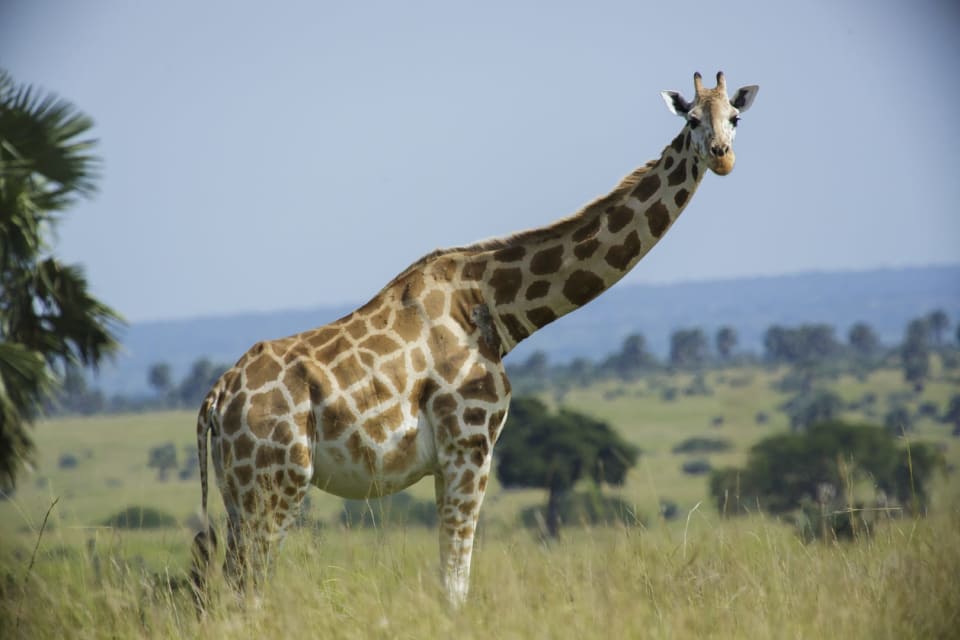

Giraffes browse the acacia savannas and grasslands of sub-Saharan Africa by day, in loose herds of 10 to 20 that members join and leave freely, and they can go a long time without drinking. A mother stands over her calf and kicks at any predator that comes near. Hunters have long taken them for meat; the skin made shields, sandals, drums, buckets, reins and whips, the tendons made instrument strings, the tail hair made fly-whisks, bracelets, necklaces and thread, and the tail itself served as money or a badge of authority.
- Danger
- Dangerous if cornered
- How it is met
- In herds, by day
- Size
- Huge
- In winter
- Active in winter
Where it lives
Feeds on
Marula, Mopane
Gives
Giraffe Meat, Giraffe Hide, Giraffe Tail Hair
Sources
- Sarah Maisano, Giraffa camelopardalis (giraffe). Animal Diversity Web, University of Michigan Museum of Zoology, 2006.
- Giraffe. Wikipedia, The Free Encyclopedia, 2026.
- Girafe. Wikipédia, l'encyclopédie libre, 2026.
Open it in Biomes — MGS Toolbox