River
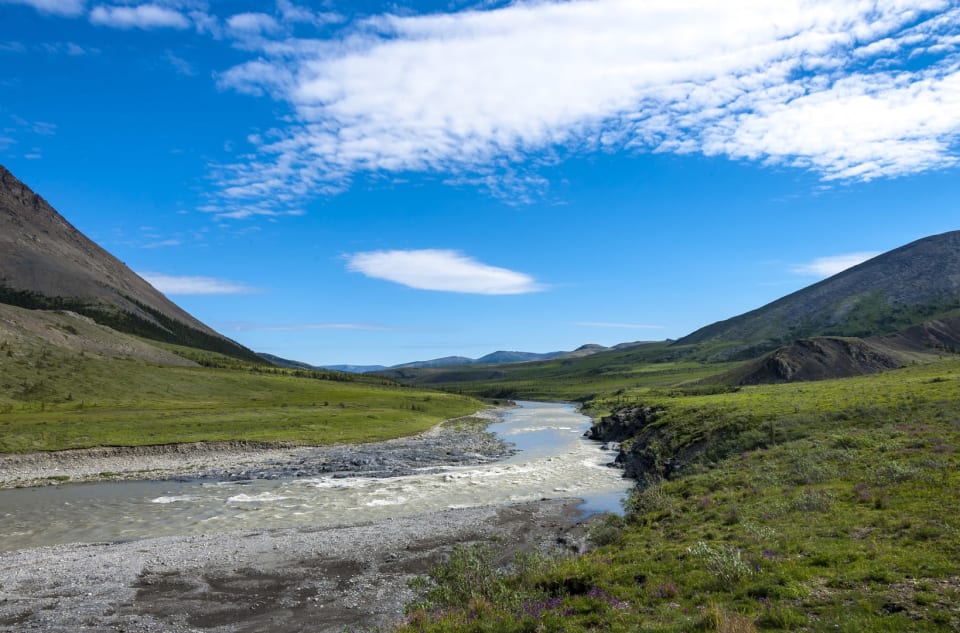

Running water large enough to carry boats and to bar the way, brown in flood and clear in a dry summer. It hisses over the shoals and goes quiet in the deep pools, and its banks smell of mud, willow and wet weed. Pike and carp hold in the slow reaches, salmon and eels come and go with the seasons, and herons, otters and kingfishers live off them. Rivers are roads, borders and larders at once: towns stand on them, mills turn on them, and fords and bridges are fought over. People fear the spring flood that carries off houses, and the current that pulls a swimmer under on a warm afternoon. The Loire, wide and shallow over its shifting sandbanks, is a river of this kind.
Hear it
- By day: Large River (On Patreon, Guardian tier)
- In the woods: Forest River (In the album RPG Ambiences Vol. 8)
- At night: Forest River Night (On Patreon, Guardian tier)
- In open country: River in Grasslands (On Patreon, Raven tier)
- In winter: Winter River (In the album RPG Ambiences Vol. 6)
- By boat: Rowboat on Large Forest River (On Patreon, Guardian tier)
- On a barge: Sailing Barge on Calm River (On Patreon, Guardian tier)
- A water mill: Water Mill (In the album RPG Ambiences Vol. 8)
Adventure hooks
- A miller has dammed the river to drive a new mill, and the salmon no longer reach the fishing villages upstream. Both sides are hiring toughs, and the party gets an offer from each.
- The ferryman at the rope crossing raises his fare every day, and swears it is because the river grows wider. He is right: it gains a few paces every night, and nobody knows where the water is coming from.
- A barge of wine has run aground on a sandbank, and its crew are drinking the cargo while they wait for the water to rise. The owner wants it afloat before there is nothing left to float.
- Bodies have come down the river, one each morning, all dressed in the same blue cloth. The town upstream says it knows nothing, and has shut its gates.
What grows here
- Bald Cypress (tree). A deciduous conifer of 10 to 40 m whose feathery needles turn copper-red and fall each autumn, its trunk ringed by woody knees rising from the roots. It once dominated the swamps and river bottoms of the southeastern United States and can live over 2,000 years. Its water-resistant wood was used for canoes, coffins and shingles. Gives: Bald Cypress Wood.
- Black Alder (tree). A tree of 20 to 30 m along riverbanks, in swamps and wet woods of Europe, southwest Asia and North Africa; it bears standing water better than other alders. Bacteria in its roots fix nitrogen, so it grows on poor soil and enriches it, and its roots hold riverbanks. Birds feed on its seeds in winter. Gives: Alder Wood, Alder Bark.
- Nipa Palm (tree). A palm with no trunk above ground: its stem creeps through the mud and only the fronds, up to 9 m long, rise from it. It grows in soft mud along tidal rivers and mangroves from India and Sri Lanka through Southeast Asia to New Guinea and northern Australia. Its sweet sap makes palm wine, vinegar and sugar, its young seeds are a sweet snack, and its fronds make excellent thatch, longer-lasting than coconut thatch. Food of: Crab-eating Macaque. Gives: Nipa Palm Sap, Nipa Palm Seeds, Nipa Palm Frond.
- Sea Hibiscus (tree). An evergreen coastal tree of the tropics the world over, on beaches, along rivers and in mangrove forests, tolerant of salt and waterlogging. Its flowers open bright yellow with a deep red heart and turn orange, then red, before they fall at the end of the day. Austronesian voyagers carried it across Southeast Asia and Oceania for its wood and fibre. Gives: Sea Hibiscus Bast, Sea Hibiscus Wood.
- White Willow (tree). A fast-growing, short-lived willow of Europe, western and central Asia and North Africa, named for the silky white hairs under its narrow leaves, that grows along riverbanks, in wetlands and on floodplains. It is often pollarded for its long flexible shoots, the withies, woven into baskets. Its bark held salicin, the compound from which salicylic acid was first separated, and once tanned leather; its light, tough wood makes cricket bats and small woodwork. Gives: Willow Withies, White Willow Wood, Willow Bark.
- Black Elder (shrub). A fast-growing deciduous shrub or small tree of Europe, western Asia and North Africa with pinnate leaves, flat sprays of scented ivory flowers in early summer and drooping clusters of black berries in autumn. It favours open, nutrient-rich ground: woodland edges, hedgerows, scrub and riverbanks. The flowers make cordials and the cooked berries jam, soup and wine, while the raw berries, leaves and bark are poisonous. Food of: Sheep. Gives: Elder Flower, Elderberries.
- Sea Buckthorn (shrub). A spiny shrub of 2 to 5 m with silvery leaves and clusters of small orange berries, found from the coasts of Europe to Mongolia and China. It grows on coastal dunes, riverbeds and gravel slopes, in the dry semi-deserts of central Asia and above the tree line in the mountains. The thorns make picking slow; fieldfares and other birds strip the berries in winter. Gives: Sea Buckthorn Berries, Sea Buckthorn Oil.
- Broadleaf Arrowhead (herb). A wetland perennial of 60 to 120 cm with arrow-shaped leaves and white flowers in July to September, forming dense colonies in ponds, swamps and along lakes and rivers from southern Canada to South America. Its tubers, the wapato or duck-potato, were a major food of Native peoples. Beavers, porcupines and muskrats eat the whole plant, tubers included. Food of: Muskrat. Gives: Wapato.
- Broadleaf Cattail (herb). A wetland plant of 1.5 to 3 m with broad strap leaves and a brown sausage-shaped seed head, always in or beside shallow water. It grows across Eurasia and North America and more locally in Africa and South America, from sea level to 2,300 m. Nearly every part is edible, and its leaves thatch roofs and seat chairs. Food of: Horse. Gives: Cattail Rhizome, Cattail Leaf, Cattail Pollen.
- Common Camas (herb). A perennial of western North America, from British Columbia and Alberta to California and east to Montana and Wyoming, with grass-like leaves, a black-skinned bulb and star-shaped blue flowers in late spring. It fills moist meadows and prairies, rocky ground, open woods and the banks of streams and rivers. Its bulb was an important food of many native peoples of the West, but the white-flowered death camas grows in the same places and its bulb is hard to tell apart. Gives: Camas Bulb.
- Mangrove Fern (herb). A big leathery fern with fronds up to 2 m (4 m in Malaysian swamps), found across the tropics in mangroves, salt marshes, swamps and on riverbanks; it is the only fern that can grow in, and even be flooded by, the sea. Its very young fronds are eaten raw or cooked: in salads in Cambodia, in a spicy coconut gravy in Goa. Dried fronds are strung on rods and used instead of straw to thatch roofs. Gives: Mangrove Fern Fronds.
- Marsh Mallow (herb). A soft, velvety perennial of 1 to 1.8 m with pale pink flowers around July, growing in marshes, salt marshes and on riverbanks of Europe, western Asia and North Africa. Its genus name comes from the Greek for "to heal", and Charlemagne listed it among the plants to grow in the royal gardens. Its root gave the first marshmallow sweet. Gives: Marsh Mallow Root.
- Meadowsweet (herb). A perennial of 1 to 2 m with creamy-white flowers of a strong, sweet smell, dominating damp meadows, fens, wet woods, ditches, stream banks and the edges of alder woods in Europe and western Asia. Its English name comes from flavouring mead. In 1838 salicylic acid was drawn from its buds, and aspirin is named after its old name, Spiraea. Gives: Meadowsweet Flowers, Meadowsweet Root.
- Sacred Lotus (herb). An aquatic plant of calm water 30 cm to 2.5 m deep, in ponds, lakes, marshes and the floodplains and deltas of slow rivers, native from East Asia to India and spread by people across Southeast Asia and northern Australia. Its round leaves reach 80 to 100 cm across and its flowers 35 cm, warming themselves to 30 to 35 °C. Almost every part is eaten, and it is holy to Buddhists and Hindus. Its seeds keep for centuries: 1,300-year-old seeds from a dry lakebed in China have sprouted. Gives: Lotus Root, Sacred Lotus Seed.
- Taro (herb). A tropical perennial with big heart-shaped leaves and a starchy corm, thought native to southern India and Southeast Asia, growing in wetlands, marshes and low ground along streams and rivers. It is one of the oldest crops: traces of taro about 10,000 years old have been found at Kuk Swamp in New Guinea. Raw, the plant is full of needle-like oxalate crystals that burn the mouth and throat: it must be cooked. Food of: Cattle. Gives: Taro Corm, Taro Leaves.
- Giant Water Lily (herb). The giant water lily of the Amazon basin, the Pantanal and Guyana, with floating leaves up to 3 m across on stalks 7 to 8 m long, in calm warm water and the várzeas flooded by the rains. A leaf has held over 100 kg, but the stems and the undersides bristle with spines. Its lentil-sized seeds, rich in starch, pop in the heat like popcorn, and the rhizome and leaf stalks are eaten like manioc. Gives: Giant Water Lily Seeds, Giant Water Lily Rhizome.
- Water Caltrop (herb). A floating annual with rosettes of diamond-shaped leaves, rooted in the mud of calm, shallow fresh water across Eurasia and Africa; it needs water above 22 °C for at least two months a year. Its horned nut was eaten since the Neolithic in Europe and for 3,000 years in China. The spines are sharp enough to pierce straw sandals. Brought to North America around 1874, it is now an invasive weed there. Food of: Eurasian Beaver. Food of: Muskrat. Food of: Mute Swan. Gives: Water Caltrop Nut.
- Water Hyacinth (herb). A free-floating plant of tropical South America, buoyed by swollen leaf stalks, with glossy leaves, purple-black hanging roots and spikes of lavender flowers. It spreads by cloning itself and now chokes waters across the world: in the Sudd it has largely replaced the Nile cabbage, and on Lake Victoria it blocks the harbours and thins the fish. As it rots it robs the water of oxygen and kills fish. It cannot stand brackish water, and fresh plants hold prickly crystals that make the skin itch. Gives: Water Hyacinth Stalks.
- Water Mint (herb). A strongly minty perennial up to 90 cm, with square stems, toothed leaves and round heads of tiny purple flowers in summer, growing in the shallow edges of streams, rivers, pools, ditches, marshes and fens of Europe, North Africa and western Asia. It is used as a kitchen herb like spearmint and for herbal tea, though peppermint (its hybrid) tastes better. Folk medicine took mints as a tonic and for digestion, and rubbed them on against colds and headaches. Gives: Water Mint Leaves.
- Watercress (herb). A fast-growing perennial of the cabbage family, with hollow stems and small white flowers, growing in clear, shallow, slow-flowing, non-acidic water from Europe and North Africa to China, up to 2,000 m. It is one of the oldest leaf vegetables eaten by people. Wild cress from water reached by livestock dung can carry the liver fluke: never eat it raw. Gives: Watercress.
- Yellow Water-lily (herb). An aquatic perennial with thick rhizomes, leathery floating leaves of 16 to 30 cm and fragrant yellow flowers, found in shallow lakes, ponds, swamps, slow rivers and stream margins of Europe, northwest Africa and western Asia, up to 3,000 m. It bears polluted water less well than the white water-lilies. Deer, elk and birds eat its leaves, stems and roots. Gives: Water-lily Rhizome, Water-lily Seeds.
- Longstamen Rice (grass). A perennial wild rice with creeping rhizomes, native to most of Africa south of the Sahara and Madagascar, growing in swamps, ponds, lake and river sides and flooded grasslands, it can blanket flooded meadows and grows in water up to 4 m deep, though usually less than 1 m. The grain is cooked and tastes good, but it falls from the ear at a touch, so people reap it unripe or shake the ripe heads over baskets; it is a famine food. The tall straw makes thatch. Gives: African Wild Rice, Wild Rice Straw.
- Antelope Grass (grass). A tall, reed-like perennial grass of tropical and subtropical Africa, growing in dense even stands on seasonally flooded grassland, in swamps and along rivers and lakes; it makes up much of the vegetation of the Sudd. It grows in the wet season, dies back in the dry season and resprouts hard after wildfire. It is grown as fodder for livestock and withstands heavy grazing. Gives: Antelope Grass Grain.
- Bourgou (grass). A floating water grass of tropical Africa and Asia whose spongy stems trail up to 2 m and form nearly pure mats in swamps and standing water. The Fulani once grew it widely in the Inner Niger Delta: they ate the seeds and brewed drinks from it, and the sweet stems are chewed for their juice or boiled down to brown sugar. It still gives hay for animals and holds flood banks against erosion. Gives: Bourgou Stem, Bourgou Seeds.
- Common Reed (grass). A tall wetland grass of 1.5 to 4 m, found worldwide, that forms vast reed beds in shallow fresh or brackish water, like the 1,700 km² of the Danube Delta. Its purple plumes turn grey and silky in autumn and the stems stand through the winter. It is the classic thatch of Europe. Food of: Goat. Food of: Cattle. Gives: Reed Stem, Reed Rhizome.
- Hippo Grass (grass). A thick-stemmed, hairy aquatic grass of Africa, from Senegal to Egypt and south to Namibia, and of Assam, Bangladesh and northern Indochina, growing in dense stands in water up to 5.5 m deep. On the Kafue Flats of Zambia it rules the slow, rich waters, and the great herds of lechwe live on it through the dry season. When the floods rise, whole clumps tear loose and drift as floating islands that other sedges and herbs colonise.
- Wild Rice (grass). An annual aquatic grass of shallow, calm water in small lakes and slow streams, native to the Great Lakes and the boreal lakes of Manitoba, Saskatchewan, Ontario and Minnesota. Often only its flowering head rises above the water. The Ojibwe call it manoomin and hold it sacred; it was a staple grain of the Ojibwe, Dakota and Algonquin peoples. Food of: Mallard. Gives: Wild Rice.
- Papyrus (sedge). A tall sedge of 4 to 5 m whose triangular stems end in a green mop of thread-like rays. It forms vast pure stands in the swamps and on the lake and river margins of tropical Africa, and in deep water floats in mats that make the sudd. The Egyptians made paper, boats, mats and rope from it. Gives: Papyrus Stem, Papyrus Rhizome.
- Common Hop (vine). A climbing perennial of Europe, western Asia and North America whose rough twining stems reach 10 m each summer and die back to the rootstock in autumn. It grows in half-shade on wood edges, in clearings and hedges and on riverbanks, and its Latin name lupulus, 'little wolf', comes from the way it strangles the willows it climbs. Male and female flowers grow on separate plants, and about one person in thirty gets a rash from handling it. Gives: Hop Cones, Hop Shoots.
Animals
- African Buffalo (man-killer, in herds, day and night)
- American Alligator (man-killer, alone, day and night)
- Hippopotamus (man-killer, in herds, by night)
- Jaguar (man-killer, alone, at dawn and dusk)
- Nile Crocodile (man-killer, in colonies, day and night)
- Saltwater Crocodile (man-killer, alone, day and night)
- Green Anaconda (can wound or kill, alone, at dawn and dusk)
- Moose (can wound or kill, alone, at dawn and dusk)
- Red Deer (can wound or kill, in herds, at dawn and dusk)
- Wild Boar (can wound or kill, in families, by night)
- Common Snapping Turtle (dangerous if cornered, alone, by day)
- Eurasian Beaver (dangerous if cornered, in families, by night)
- Eurasian Eagle-Owl (dangerous if cornered, alone, by night)
- European Badger (dangerous if cornered, in families, by night)
- Golden Eagle (dangerous if cornered, in pairs, by day)
- Green Iguana (dangerous if cornered, alone, by day)
- Mute Swan (dangerous if cornered, in pairs, by day)
- South American Tapir (dangerous if cornered, alone, by night)
- Yacare Caiman (dangerous if cornered, in colonies, day and night)
- Capybara (harmless, in herds, at dawn and dusk)
- Common Raven (harmless, in pairs, by day)
- Edible Frog (harmless, alone, day and night)
- Eurasian Otter (harmless, alone, by night)
- Freshwater Pearl Mussel (harmless, in colonies, day and night)
- Gammarus (harmless, in colonies, by night)
- Grey Heron (harmless, alone, at dawn and dusk)
- Greylag Goose (harmless, in flocks, by day)
- Jabiru (harmless, in pairs, by day)
- Lowland Paca (harmless, in pairs, by night)
- Mallard (harmless, in flocks, by day)
- Muskrat (harmless, in families, at dawn and dusk)
- White-throated Dipper (harmless, in pairs, by day)
Kept here
- Water Buffalo (can wound or kill, in herds, day and night)
Creatures
- Giant Toad (a fight to fear, Challenge 1)
- Swarm of Piranhas (a fight to fear, Challenge 1)
- Giant Constrictor Snake (a fight to fear, Challenge 2)
- Gold Dragon (a fight to fear, Challenge 3-24)
- Giant Crocodile (deadly, Challenge 5)
This work includes material from the System Reference Document 5.2.1 ("SRD 5.2.1") by Wizards of the Coast LLC, available at https://www.dndbeyond.com/srd. The SRD 5.2.1 is licensed under the Creative Commons Attribution 4.0 International License, available at https://creativecommons.org/licenses/by/4.0/legalcode.
To gather
African Buffalo Hide, African Buffalo Meat, African Wild Rice, Wild Rice Straw, Alder Bark, Alder Wood, American Alligator Meat, Antelope Grass Grain, Bald Cypress Wood, Elderberries, Bourgou Seeds, Bourgou Stem, Cattail Leaf, Cattail Pollen, Cattail Rhizome, Camas Bulb, Capybara Hide, Capybara Meat, Hop Cones, Hop Shoots, Reed Rhizome, Reed Stem, Snapping Turtle Meat, Crocodile Glands, Edible Frog Legs, Eurasian Beaver Pelt, Eurasian Otter Pelt, European Badger Hair, European Badger Skin, Iguana Eggs, Iguana Meat, Greylag Goose Egg, Greylag Goose Feathers, Greylag Goose Meat, Horsehair, Mallard Meat, Mangrove Fern Fronds, Marsh Mallow Root, Meadowsweet Flowers, Meadowsweet Root, Moose Hide, Muskrat Meat, Muskrat Pelt, Nile Crocodile Egg, Nipa Palm Frond, Nipa Palm Sap, Nipa Palm Seeds, Papyrus Rhizome, Papyrus Stem, Red Deer Antler, Red Deer Hide, Lotus Root, Saltwater Crocodile Meat, Sea Buckthorn Berries, Sea Hibiscus Bast, Sea Hibiscus Wood, Tapir Hide, Tapir Meat, Taro Corm, Taro Leaves, Wapato, Buffalo Hide, Buffalo Milk, Water Caltrop Nut, Water Hyacinth Stalks, Water Mint Leaves, Watercress, Willow Withies, White Willow Wood, Wild Boar Bristles, Wild Rice, Yacare Caiman Hide, Yacare Caiman Meat, Water-lily Rhizome, Water-lily Seeds, American Alligator Hide, Eurasian Beaver Castoreum, Golden Eagle Feather, Green Anaconda Fat, Grey Heron Meat, Hippopotamus Hide, Hippopotamus Ivory, Jabiru Feathers, Jabiru Meat, Jaguar Fang, Jaguar Pelt, Paca Meat, Mute Swan Feather, Mute Swan Meat, Nile Crocodile Hide, Saltwater Crocodile Hide, Sea Buckthorn Oil, Giant Water Lily Rhizome, Giant Water Lily Seeds, Yacare Caiman Urine, Freshwater Pearl, Hemlock Stem, River Pearl Grit, Valerian Root, Electric Eel Gland, Sturgeon Roe
Nearby biomes
Open it in Biomes — MGS Toolbox