Enchanted Alpine Meadow
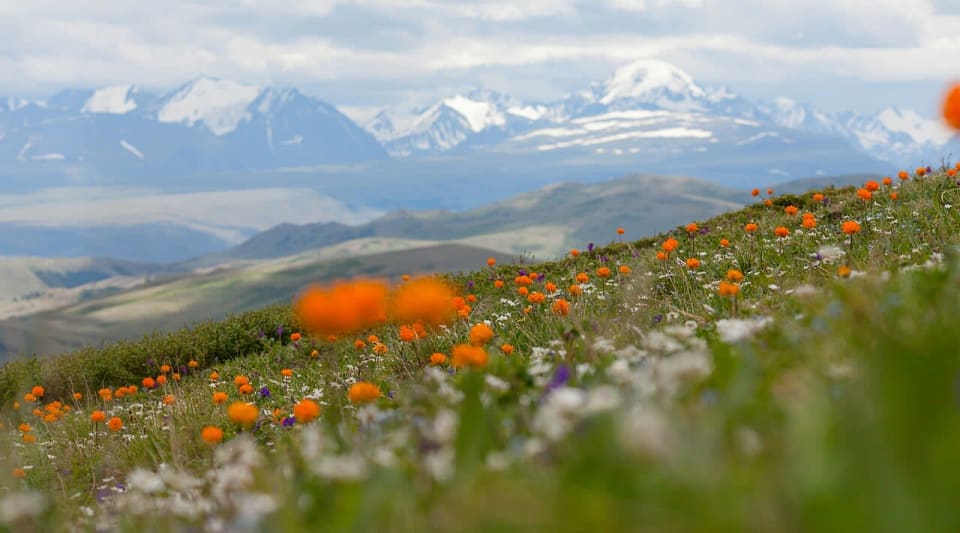

The fey have touched this land. Paths shift between morning and evening, lights dance in the trees, and time does not always pass as it should. Everything here can be had, for a price. High pastures above the last trees, bright with flowers in a short summer and buried in snow the rest of the year. The air is thin, the weather turns fast, and herders bring their animals up only for the warm months.
Over the year it averages 2 °C.
Hear it
- Enchanted: Elven Forest (In the album RPG Ambiences Vol. 1)
- Fey: Fairies' Garden (In the album RPG Ambiences Vol. 5)
- In the wind: Windy Hilltop (In the album RPG Ambiences Vol. 4)
- On foot: Walking in the Mountains (On Patreon, Guardian tier)
- In the fog: Misty Mountain Path (On Patreon, Guardian tier)
- In a storm: Stormy Highlands (In the album RPG Ambiences Vol. 4)
- By the river: Mountain River (On Patreon, Guardian tier)
- Rapids: Mountain Rapids (On Patreon, Guardian tier)
- In a shelter: Mountain Shelter (In the album RPG Ambiences Vol. 3)
- Bitter cold: Strong Snowy Wind (On Patreon, Guardian tier)
- Falling rock: Avalanche (On Patreon, Raven tier)
For the table
- Ground
- rough, about 20 km a day on foot
- Seasons
- -6 °C in the heart of winter, 10 °C in the heart of summer
- Water
- plentiful
- Foraging
- rich
Hazards
- Thin air. High up, breath comes short and the newcomer tires twice as fast. Some fall sick with headaches and nausea until they get used to it.
- Bitter cold. Without furs, a fire and shelter at night, the cold numbs, then kills. Frostbite takes fingers and toes first.
- Strong wind. Steady wind tires walkers, blows out fires and, on sand or snow, blinds and buries the track.
- Falling rock. Frost, rain or a careless step bring stones down from above. Scree slides underfoot.
- Shifting paths. The path walked this morning is not there in the evening. Landmarks swap places, and the party may arrive somewhere it never meant to go.
- Fey food. Fruit that is too sweet, wine poured by a smiling stranger. Whoever eats it longs for it ever after.
- Lost time. A night spent dancing in a fey ring may last a week outside. Beards grow, food spoils, and friends have given up waiting.
D&D 5e
- Plays as
- mountain, slow pace at most
- Checks
- forage: Survival DC 20 · find the way: DC 15 · search: DC 20
- Creatures are spotted at
- 4d10 × 10 ft
- Thin air. At 3,000 m (10,000 ft) and above, each hour of travel counts as two toward the day's limit, so forced-march saves come sooner. Thirty days at that height acclimatise; above 6,000 m (20,000 ft) only natives do.
- Bitter cold. At −18 °C (0 °F) or colder, anyone exposed makes a DC 10 Constitution save at the end of each hour or gains 1 Exhaustion. Cold resistance passes automatically; sleeping in a bedroll does too, and a blanket gives Advantage.
- Strong wind. Disadvantage on ranged weapon attacks; open flames go out and fog clears; a flyer must land at the end of its turn or fall. In a desert it can raise a sandstorm: Disadvantage on Wisdom (Perception) checks.
- Shifting paths. (House rule) Navigation checks here have Disadvantage. On a failure by 5 or more, the party arrives at a place of the GM's choosing, usually one the fey wanted it to see.
- Fey food. (House rule) Whoever eats or drinks it makes a DC 13 Wisdom save or has the Charmed condition toward the host until the next sunrise, and will not leave of its own will while the host asks it to stay.
- Lost time. (House rule) A creature that joins a fey revel makes a DC 14 Charisma save when it leaves. On a failure, 1d6 days have passed outside; on a 1, 1d6 months.
This work includes material from the System Reference Document 5.2.1 ("SRD 5.2.1") by Wizards of the Coast LLC, available at https://www.dndbeyond.com/srd. The SRD 5.2.1 is licensed under the Creative Commons Attribution 4.0 International License, available at https://creativecommons.org/licenses/by/4.0/legalcode.
Pathfinder Second Edition
- Plays as (Pathfinder Second Edition)
- mountain, greater difficult terrain, about 11 km a day at Speed 25
- Checks
- Subsist: Survival DC 20 · Sense Direction: Survival DC 15
- Random encounters
- flat check DC 16 each day
- Bitter cold. Temperature bands (GM Core p. 95): at 0 °C to −11 °C (mild cold) travellers tire after 4 hours; at −11 °C to −29 °C (severe cold) they also take minor cold damage (1d6 to 2d6) every hour; at −29 °C to −62 °C (extreme cold), every 10 minutes. Cold-weather gear removes severe-cold damage and turns extreme cold into severe. A soaked traveller counts the band one colder.
- Strong wind. Wind gives a –1 to –4 penalty to Perception that relies on hearing and to physical ranged attacks, and puts out handheld flames; strong wind can call for Athletics to move, a critical failure pushing back and knocking prone (GM Core p. 95).
- Falling rock. An avalanche, landslide or collapse deals major or massive bludgeoning damage (8d6 to 24d6); a Reflex success halves it and a critical success also avoids burial. Buried creatures take minor damage each minute and are dug out with Athletics (GM Core p. 96).
This product is licensed under the ORC License located at the Library of Congress at TX 9-307-067 and available online at various locations including paizo.com/orclicense, azoralaw.com/orclicense, and others. All warranties are disclaimed as set forth therein. Attribution: this rules layer is based on the following Licensed Material: Pathfinder Player Core © 2023 Paizo Inc., Designed by Logan Bonner, Jason Bulmahn, Stephen Radney-MacFarland, and Mark Seifter. Authors: Alexander Augunas, Kate Baker, Logan Bonner, Jason Bulmahn, Carlos Cabrera, Calder CaDavid, James Case, Eleanor Ferron, Steven Hammond, Joan Hong, Vanessa Hoskins, James Jacobs, Jenny Jarzabski, Erik Keith, Dustin Knight, Lyz Liddell, Luis Loza, Patchen Mortimer, Dennis Muldoon, Stephen Radney-MacFarland, Mikhail Rekun, David N. Ross, Michael Sayre, Mark Seifter, Kendra Leigh Speedling, Mark Thompson, Clark Valentine, Andrew White, Landon Winkler, and Linda Zayas-Palmer; Pathfinder GM Core © 2023 Paizo Inc., Designed by Logan Bonner and Mark Seifter. Authors: Amirali Attar Olyaee, Logan Bonner, Creighton Broadhurst, Jason Bulmahn, James Case, Jesse Decker, Eleanor Ferron, Fabby Garza Marroquín, Jaym Gates, Matthew Goetz, James Jacobs, Brian R. James, Jenny Jarzabski, Dustin Knight, Jason LeMaitre, Lyz Liddell, Luis Loza, Ron Lundeen, Stephen Radney-MacFarland, David N. Ross, Michael Sayre, Mark Seifter, Owen K.C. Stephens, Amber Stewart, Clark Valentine, Landon Winkler, and Linda Zayas-Palmer; Pathfinder Monster Core © 2024 Paizo Inc., Authors: Alexander Augunas, Dennis Baker, Kate Baker, Joshua Birdsong, Joseph Blomquist, Logan Bonner, Jason Bulmahn, James Case, John Compton, Paris Crenshaw, Adam Daigle, Darrin Drader, Brian Duckwitz, Robert N. Emerson, Scott Fernandez, Eleanor Ferron, Leo Glass, Matthew Goodall, BJ Hensley, Thurston Hillman, Vanessa Hoskins, James Jacobs, Jenny Jarzabski, Miko Kallio, Jason Keeley, Jeff Lee, Lyz Liddell, Luis Loza, Ron Lundeen, Robert G. McCreary, Philippe-Antoine Menard, Jacob W. Michaels, Dave Nelson, Jason Nelson, Tim Nightengale, Stephen Radney-MacFarland, Mikhail Rekun, Patrick Renie, Alex Riggs, David N. Ross, Michael Sayre, Mark Seifter, Chris S. Sims, Amber Stewart, Jeffrey Swank, William Thompson, Jason Tondro, Clark Valentine, Landon Winkler, Tonya Woldridge, and Linda Zayas-Palmer. If you use our Licensed Material in your own published work, please credit us as follows: Biomes, Pathfinder Second Edition rules layer © 2026 Michael Ghelfi. Reserved Material: the names of Biomes and its catalogues, its descriptions, sounds, art and code. Pathfinder is a registered trademark of Paizo Inc.; this site is not published, endorsed, or specifically approved by Paizo Inc.
Crossing it
Besides walking, depending on the era and the season (Biomes estimates of a day’s distance):
- On horseback: about 30 km a day
- By wagon: about 15 km a day
- By stagecoach: about 60 km a day
- By dog sled: about 45 km a day
- By train: about 400 km a day
- By airship: about 900 km a day
- By bush plane: about 800 km a day
- By 4x4: about 100 km a day
- By snowmobile: about 100 km a day
- By rover: about 60 km a day
- By yak: about 22 km a day
- On a flying mount: about 150 km a day
- By flying carpet: about 100 km a day
- By bicycle: about 40 km a day
- By car: about 200 km a day
- By truck: about 150 km a day
- By motorbike: about 150 km a day
- By armoured buggy: about 120 km a day
A scene
- Snowing. The wind shrieks and it’s snowing in a harsh, driving storm. Beneath the temptest’s roar is a rhythmic crunch. Footsteps, perhaps. What hides in this grey? The full generator on the blog
Adventure hooks
- A traveller came back from the enchanted land with a basket of fruit and is now sixty, though he left at twenty. He wants the years back, and the fey who sold him the fruit do not give refunds, only exchanges.
- A local girl has been promised as a bride to a fey prince, by a grandfather who has since died. She is curious about the prince, and wants the party to find out what he is like before the wedding.
- The paths here change between morning and evening, and a merchant has made a fortune selling maps that update themselves. His maps have started showing a place that does not exist, and people are walking into it.
- A dancing light leads the party to a feast where they are guests of honour. Everything is free, as long as nobody eats, and someone already has.
- A herdsman took the cows up to the high pasture in spring and brought every one of them down in autumn, but not his voice. He writes on a slate that he traded it, and will not say to whom.
- The cheese from one hut wins every fair in the valley, and a rival is sure it is witchcraft. It is a herb that grows on a single ledge above a sheer drop, and its owner will defend the secret with a pitchfork.
- A late snowstorm has trapped a party of pilgrims in a stone hut below the pass. The shepherd who found them counted eleven in the morning, and there are twelve now.
- A collector from the city pays a silver piece for every rare flower dug up with its roots. The herders are stripping the slopes bare, the turf has started to slide, and the village sits right below.
What grows here
- Arctic Willow (shrub). A creeping willow rarely over 15 cm tall with round glossy leaves, the woody plant that reaches furthest north, on tundra and rocky moorland around the Arctic and on high mountains further south. Muskoxen and caribou browse its bark and twigs; Inuit and Gwich'in burnt the twigs, used the flowers as lamp wicks and treated wounds, toothache and diarrhoea with it. Food of: Muskox. Food of: Reindeer. Gives: Arctic Willow Leaf.
- Sea Buckthorn (shrub). A spiny shrub of 2 to 5 m with silvery leaves and clusters of small orange berries, found from the coasts of Europe to Mongolia and China. It grows on coastal dunes, riverbeds and gravel slopes, in the dry semi-deserts of central Asia and above the tree line in the mountains. The thorns make picking slow; fieldfares and other birds strip the berries in winter. Gives: Sea Buckthorn Berries, Sea Buckthorn Oil.
- Thinleaf Huckleberry (shrub). A deciduous shrub up to 1.5 m of the high mountains of western North America, from Alaska to California and the Rockies, in subalpine pine and spruce forests and open meadows. It bears so heavily from late summer to early autumn that stories tell of mountainsides turned purple. It is a key food of black bears and grizzlies, and Native peoples burned the patches to keep them fruiting. Food of: American Black Bear. Food of: Brown Bear. Food of: Wapiti. Food of: Moose. Gives: Huckleberries.
- Alpine Bistort (herb). A slender herb of 5 to 15 cm with a spike of white or pink flowers, the lower ones replaced by little starchy bulbils that drop and grow into new plants. It is common all over the Arctic and on the Alps, Pyrenees, Carpathians, Caucasus and Tibetan Plateau, in short damp grass. Rock ptarmigans and reindeer seek out the bulbils, which Arctic peoples sometimes eat too; the Samoyedic peoples of Russia eat the root. Food of: Reindeer. Gives: Bistort Bulbils, Bistort Root.
- Common Sorrel (herb). A perennial about sixty centimetres tall with arrow-shaped leaves in a rosette and spikes of reddish flowers in early summer. It grows in grassland across Europe, from the northern Mediterranean coast to the north of Scandinavia and into Central Asia, even on poor soil. The leaves are a sharp, lemony green for soups and sauces, best eaten in moderation. Gives: Sorrel Leaves.
- Edelweiss (herb). A small woolly white star-flower, 3 to 20 cm tall, of limestone scree and cliffs in the Alps, Pyrenees and Apennines, about 1,800 to 3,400 m up. Picking one from a sheer cliff was once proof of daring; overpicking got it protected in Austria and Germany from 1874 and Switzerland from 1879. Mountain folk used it against bellyache, diarrhoea and coughs. Gives: Edelweiss Flower.
- Great Yellow Gentian (herb). A robust perennial herb of the mountains of central and southern Europe, about one and a half metres tall, with broad ribbed opposite leaves and yellow flowers clustered up the stem; it can live fifty years and takes about ten to flower. It grows in montane and subalpine grassland in the Alps, Jura, Pyrenees, Massif Central and Balkans. Its thick, intensely bitter root is dug for herbal bitters, remedies and liqueurs, and the plant is now protected in parts of its range. Gives: Gentian Root.
- Mountain Sorrel (herb). A low herb with kidney-shaped, sour leaves, common in the Arctic tundra and on high mountains all around the north, in meadows, scree, late snow-beds and beside streams. The leaves taste sharp from oxalic acid and are eaten raw or cooked; the Inuit and the Sami counted on it, and it carries vitamin C. Deer and elk graze it. Gives: Mountain Sorrel Leaves.
- Roseroot (herb). A fleshy plant of 5 to 35 cm whose shoots rise from one thick root, met across much of the Arctic, on sea cliffs and on high mountains of Europe, central Asia and the Rockies. Its leaves and shoots are eaten raw or cooked like spinach, bitter. Russians and Scandinavians have used it for centuries against the strain of their harsh, cold climate; rising demand now threatens it in many countries. Gives: Golden Root, Roseroot Shoots.
- Seep Monkeyflower (herb). A yellow-flowered, bee-pollinated annual or perennial of western North America, from sea level high into the mountains, and very common by water in New Zealand. It grows along streams and seeps, and in many other places besides: the splash zone of the Pacific, the chaparral of California, the western deserts, the geysers of Yellowstone, alpine meadows, and even the toxic tailings of copper mines. Its slightly bitter leaves are eaten raw or cooked, sometimes in salads in place of lettuce. Gives: Monkeyflower Leaves.
- Yarrow (herb). A strong-smelling perennial up to a metre tall with feathery leaves and flat clusters of small white flowers. It grows across the temperate Northern Hemisphere in meadows, grassland, roadsides and open woods, from sea level to 3,500 metres. Long a wound herb for soldiers and a beer flavouring before hops; it can cause skin rashes and is toxic to dogs, cats and horses. Gives: Yarrow Tops.
- Reindeer Lichen (lichen). A pale grey, much-branched lichen that forms mats up to 10 cm deep on the ground of boreal pine forests, tundra and low alpine slopes across the Northern Hemisphere. It is a chief food of reindeer; people soaked it in wood ash to take away its bitterness and ate it, and some northern peoples boiled it as a remedy. Food of: Reindeer. Gives: Reindeer Lichen.
- Rock Tripe (lichen). Leathery lichens fixed to bare rock by a single navel-like point, found on cold stone on every continent, from the Arctic and the mountains to the boreal forest. The Cree, Inuit and Chipewyan ate it when nothing else was left, and it kept voyageurs and Franklin's 1819-1822 party alive on the Barren Grounds. It must be soaked and boiled again and again; even then it is bitter and upsets the gut. The English name comes from Canadian French. Gives: Rock Tripe.
- Caterpillar Fungus (fungus). A fungus that kills ghost moth caterpillars underground in the high meadows of the Tibetan Plateau and the Himalaya, 3,000 to 5,000 m up, then pushes a thin brown stalk out of the dead larva in spring. Tibetans call it yartsa gunbu, "summer grass, winter worm". Prized in Tibetan and Chinese medicine, a pound of the best sold for US$50,000 in 2012, and in 2004 the spring hunt brought Tibetan households 40% of their cash income. Gives: Yartsa Gunbu.
- Snow Algae (seaweed). A one-celled green alga that turns red in the snow, giving the pink "watermelon snow" or "blood snow" of summer snowfields and glaciers in the Alps, the polar regions and high ranges all over the world. In 1818 Captain John Ross saw crimson snow streaking the cliffs of Greenland like streams of blood. The red patches soak up the sun and make the snow and ice melt faster; ice worms and springtails feed on it. It is likely safe to eat: nothing supports the claim that it gives diarrhoea.
Animals
- Brown Bear (man-killer, alone, at dawn and dusk)
- American Black Bear (can wound or kill, alone, at dawn and dusk)
- Mountain Goat (can wound or kill, in herds, by day)
- Alpine Ibex (dangerous if cornered, in herds, by day)
- Argali (dangerous if cornered, in herds, by day)
- Bighorn Sheep (dangerous if cornered, in herds, by day)
- Snow Leopard (dangerous if cornered, alone, at dawn and dusk)
- Wolverine (dangerous if cornered, alone, by night)
- Alpine Marmot (harmless, in families, by day)
- American Pika (harmless, alone, by day)
- Bearded Vulture (harmless, alone, by day)
- Chamois (harmless, in herds, by day)
- Himalayan Snowcock (harmless, in flocks, by day)
- Rock Ptarmigan (harmless, in flocks, by day)
- Roe Deer (harmless, in families, at dawn and dusk)
- Siberian Ibex (harmless, in herds, by day)
- Vicuña (harmless, in families, by day)
Kept here
- Domestic Yak (dangerous if cornered, in herds, by day)
- Llama (dangerous if cornered, in herds, by day)
Creatures
Also met here
- Giant Goat (a threat to the unwary, Challenge 1/2)
- Giant Eagle (a threat to the unwary, Challenge 1)
- Hippogriff (a threat to the unwary, Challenge 1)
- Giant Elk (a threat to the unwary, Challenge 2)
- Griffon (a fight to fear, Challenge 2)
- Pegasus (a threat to the unwary, Challenge 2)
- Chimera (deadly, Challenge 6)
- Wyvern (deadly, Challenge 6)
This work includes material from the System Reference Document 5.2.1 ("SRD 5.2.1") by Wizards of the Coast LLC, available at https://www.dndbeyond.com/srd. The SRD 5.2.1 is licensed under the Creative Commons Attribution 4.0 International License, available at https://creativecommons.org/licenses/by/4.0/legalcode.
To gather
Moonstone Dragon Scale, Bistort Bulbils, Bistort Root, Alpine Marmot Fat, Alpine Marmot Tooth, Black Bear Fat, Black Bear Hide, Black Bear Meat, Arctic Willow Leaf, Beeswax Block, Bighorn Sheep Meat, Chamois Meat, Yak Hair, Yak Milk, Honey Comb, Llama Wool, Mountain Sorrel Leaves, Reindeer Lichen, Rock Ptarmigan, Rock Tripe, Roe Venison, Roseroot Shoots, Sea Buckthorn Berries, Monkeyflower Leaves, Sorrel Leaves, Huckleberries, Yarrow Tops, Alpine Ibex Blood, Alpine Ibex Horn, Argali Meat, Bighorn Sheep Horn, Brown Bear Bile, Brown Bear Hide, Chamois Gamsbart, Chamois Hide, Crystallized Honey, Gentian Root, Snowcock, Mountain Goat Meat, Golden Root, Sea Buckthorn Oil, Ibex Hide, Ibex Meat, Wolverine Pelt, Argali Horn, Edelweiss Flower, Mountain Goat Wool, Snow Leopard Bone, Snow Leopard Pelt, Yartsa Gunbu, Vicuña Wool, Beetle Wing, Four-Leaf Clover, First Morning Dew
Beneath
Near the surface the rock keeps the year's mean warmth, without seasons; it warms as one goes down.
- At the surface
- 2 °C
- 100 m
- 5 °C
- 500 m
- 16 °C
- 1 km
- 30 °C
- 3 km
- 85 °C
A town here
How large a town this land can feed, what it makes and what it must buy. Build it in Hearth
The same milieu, otherwise
Alpine Meadow, Blessed Alpine Meadow, Crystalline Alpine Meadow, Frozen Alpine Meadow, Burning Alpine Meadow
Open it in Biomes — MGS Toolbox