Dead Tundra
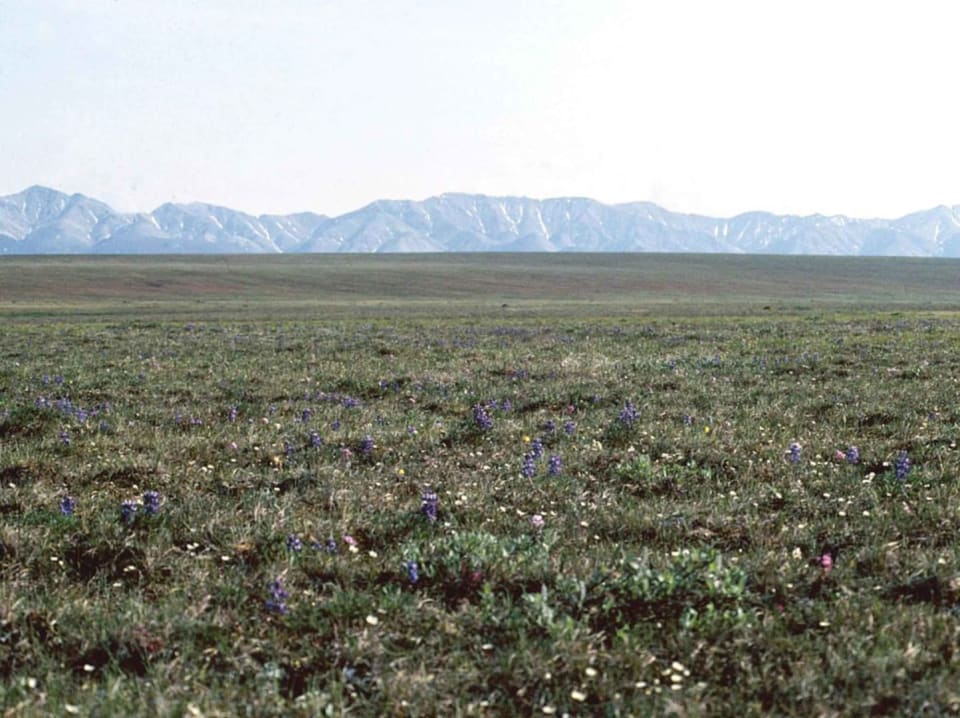

In the brief summer, when the sun never sets, the moss and lichen of this tundra lie grey and dead over the frozen ground, and the winter covers them with snow as grey as they are. The great herds no longer cross it, and their old trails are lined with antlers and bones. Ravens and a few thin foxes are all that is left, bold enough to come into a camp. Skeletons have been seen walking out of the blizzard, some still in their furs.
Over the year it averages -10 °C.
Hear it
- Dead: Dead Forest (In the album RPG Ambiences Vol. 6)
- In summer: Lively Tundra (In the album RPG Ambiences Vol. 2)
- On foot: Walking in a Lively Tundra (On Patreon, Guardian tier)
- In winter: Frozen Tundra (In the album RPG Ambiences Vol. 2)
- In the wind: Strong Snowy Wind (On Patreon, Guardian tier)
- In a storm: Thundering Tundra (On Patreon, Guardian tier)
- At camp: Campfire on a Frozen Tundra (In the album RPG Ambiences Vol. 2)
- Blizzard: Blizzard (In the album RPG Ambiences Vol. 1)
- Thin ice: Winter River (In the album RPG Ambiences Vol. 6)
- Ash wind: Strong Wind (On Patreon, Guardian tier)
- Dry beds: Windy Desert (In the album RPG Ambiences Vol. 1)
- Hungry scavengers: Ravens Constant (On Patreon, Guardian tier)
- Restless dead: Undead's Awakening (On Patreon, Guardian tier)
For the table
- Ground
- rough, about 20 km a day on foot
- Seasons
- -28 °C in the heart of winter, 8 °C in the heart of summer
- Water
- plentiful
- Foraging
- nothing
Hazards
- Bitter cold. Without furs, a fire and shelter at night, the cold numbs, then kills. Frostbite takes fingers and toes first.
- Strong wind. Steady wind tires walkers, blows out fires and, on sand or snow, blinds and buries the track.
- Blizzard. Wind and snow erase the horizon: no landmark, no up or down. Those caught in the open dig in and wait.
- Thin ice. Frozen lakes and rivers are the easy road in winter, until the ice gives way. The water beneath kills in minutes.
- Ash wind. The wind lifts the grey ash in a choking curtain. It gets into the eyes, the food, the lungs.
- Dry beds. Rivers on the map are dry ditches. What water is left is black with ash and tastes of burning.
- Hungry scavengers. With nothing else to eat, the crows, dogs and rats are bold. They follow the party and test the camp each night.
- Draining ground. The dead ground draws the life out of whatever lies on it too long. Wounds do not close while the party sleeps, and the sleepers wake grey and stiff.
- Restless dead. The dead of this land do not lie still for long. A traveller who dies here and is not burned gets up again a day later and goes looking for the living.
D&D 5e
- Plays as
- arctic, fast pace at most (with skis or snowshoes)
- Checks
- forage: Survival DC 20 · find the way: DC 10 · search: DC 10
- Creatures are spotted at
- 6d6 × 10 ft
- Bitter cold. At −18 °C (0 °F) or colder, anyone exposed makes a DC 10 Constitution save at the end of each hour or gains 1 Exhaustion. Cold resistance passes automatically; sleeping in a bedroll does too, and a blanket gives Advantage.
- Strong wind. Disadvantage on ranged weapon attacks; open flames go out and fog clears; a flyer must land at the end of its turn or fall. In a desert it can raise a sandstorm: Disadvantage on Wisdom (Perception) checks.
- Blizzard. Heavy snow makes the area Lightly Obscured: Disadvantage on Wisdom (Perception) checks. With the cold, the extreme cold rule applies.
- Thin ice. A 3 m (10 ft) square of thin ice holds 3d10 × 5 kg (× 10 lb); past that it breaks and drops everyone on it into frigid water. In frigid water a creature lasts as many minutes as its Constitution score, then makes a DC 10 Constitution save each minute or gains 1 Exhaustion. Slippery ice is difficult terrain: a DC 10 Dexterity save on entering it or fall Prone.
- Ash wind. (House rule) While the ash blows, the area is Heavily Obscured beyond 30 feet. A creature without a cloth over its mouth makes a DC 11 Constitution save at the end of the day or gains 1 Exhaustion.
- Dry beds. (House rule) No water can be found by foraging. Ashen water drunk unfiltered gives the Poisoned condition until the next long rest unless the drinker succeeds on a DC 12 Constitution save.
- Hungry scavengers. (House rule) Each night, unless the watch succeeds on a DC 13 Wisdom (Perception) check, scavengers spoil one day of rations; on a failure by 5 or more, they also bite a sleeper for 1d4 piercing damage.
- Draining ground. (House rule) A creature that finishes a long rest lying on the bare ground makes a DC 12 Constitution save. On a failure the rest restores no Hit Points, but has all its other effects. Sleeping raised off the ground, on a cot or in a hammock, avoids it.
- Restless dead. (House rule) A Humanoid that dies here rises as a Zombie 24 hours later, hostile to the living. Burning the body prevents it, and so does an hour of rites spoken over it with a successful DC 12 Intelligence (Religion) check.
This work includes material from the System Reference Document 5.2.1 ("SRD 5.2.1") by Wizards of the Coast LLC, available at https://www.dndbeyond.com/srd. The SRD 5.2.1 is licensed under the Creative Commons Attribution 4.0 International License, available at https://creativecommons.org/licenses/by/4.0/legalcode.
Pathfinder Second Edition
- Plays as (Pathfinder Second Edition)
- arctic, difficult terrain, about 16 km a day at Speed 25
- Checks
- Subsist: Survival DC 20 · Sense Direction: Survival DC 20
- Random encounters
- flat check DC 17 each day
- Bitter cold. Temperature bands (GM Core p. 95): at 0 °C to −11 °C (mild cold) travellers tire after 4 hours; at −11 °C to −29 °C (severe cold) they also take minor cold damage (1d6 to 2d6) every hour; at −29 °C to −62 °C (extreme cold), every 10 minutes. Cold-weather gear removes severe-cold damage and turns extreme cold into severe. A soaked traveller counts the band one colder.
- Strong wind. Wind gives a –1 to –4 penalty to Perception that relies on hearing and to physical ranged attacks, and puts out handheld flames; strong wind can call for Athletics to move, a critical failure pushing back and knocking prone (GM Core p. 95).
- Blizzard. A blizzard combines cold, heavy snow and strong wind (GM Core p. 96): apply the temperature band, a –1 to –4 penalty to Perception that relies on sight, and travel fatigue after 4 hours.
- Thin ice. Ice is difficult terrain and uneven ground (GM Core p. 90): moving across it can call for Acrobatics to Balance.
- Ash wind. (House rule) While the ash blows it works like thick fog (GM Core p. 95): a –2 circumstance penalty to Perception that relies on sight, creatures seen through it concealed and nothing seen beyond about 9 m. A creature without a cloth over its mouth attempts a Fortitude save DC 15 at the end of the day; on a failure it is fatigued through the next day, and on a critical failure it is also drained 1.
- Dry beds. (House rule) Subsist finds no water here. Ashen water drunk unfiltered calls for a Fortitude save DC 15, the drinker sickened 1 until its next daily preparations on a failure, sickened 2 on a critical failure; going without water follows the thirst rule (GM Core p. 43).
- Hungry scavengers. (House rule) Each night the watch attempts a Perception check DC 15; on a failure scavengers spoil one day of rations, and on a critical failure they also bite a sleeper for minor piercing damage (1d6).
- Draining ground. (House rule) A creature that spends its night's rest lying on the bare ground attempts a Fortitude save DC 15. On a failure the rest restores no Hit Points (Player Core p. 439) but has all its other effects, and on a critical failure it also wakes drained 1; sleeping raised off the ground, on a cot or in a hammock, avoids it.
- Restless dead. (House rule) A humanoid that dies here rises 24 hours later as a zombie shambler (Monster Core p. 356), hostile to the living. Burning the body prevents it, and so does an hour of rites spoken over it with a successful Religion check DC 15.
This product is licensed under the ORC License located at the Library of Congress at TX 9-307-067 and available online at various locations including paizo.com/orclicense, azoralaw.com/orclicense, and others. All warranties are disclaimed as set forth therein. Attribution: this rules layer is based on the following Licensed Material: Pathfinder Player Core © 2023 Paizo Inc., Designed by Logan Bonner, Jason Bulmahn, Stephen Radney-MacFarland, and Mark Seifter. Authors: Alexander Augunas, Kate Baker, Logan Bonner, Jason Bulmahn, Carlos Cabrera, Calder CaDavid, James Case, Eleanor Ferron, Steven Hammond, Joan Hong, Vanessa Hoskins, James Jacobs, Jenny Jarzabski, Erik Keith, Dustin Knight, Lyz Liddell, Luis Loza, Patchen Mortimer, Dennis Muldoon, Stephen Radney-MacFarland, Mikhail Rekun, David N. Ross, Michael Sayre, Mark Seifter, Kendra Leigh Speedling, Mark Thompson, Clark Valentine, Andrew White, Landon Winkler, and Linda Zayas-Palmer; Pathfinder GM Core © 2023 Paizo Inc., Designed by Logan Bonner and Mark Seifter. Authors: Amirali Attar Olyaee, Logan Bonner, Creighton Broadhurst, Jason Bulmahn, James Case, Jesse Decker, Eleanor Ferron, Fabby Garza Marroquín, Jaym Gates, Matthew Goetz, James Jacobs, Brian R. James, Jenny Jarzabski, Dustin Knight, Jason LeMaitre, Lyz Liddell, Luis Loza, Ron Lundeen, Stephen Radney-MacFarland, David N. Ross, Michael Sayre, Mark Seifter, Owen K.C. Stephens, Amber Stewart, Clark Valentine, Landon Winkler, and Linda Zayas-Palmer; Pathfinder Monster Core © 2024 Paizo Inc., Authors: Alexander Augunas, Dennis Baker, Kate Baker, Joshua Birdsong, Joseph Blomquist, Logan Bonner, Jason Bulmahn, James Case, John Compton, Paris Crenshaw, Adam Daigle, Darrin Drader, Brian Duckwitz, Robert N. Emerson, Scott Fernandez, Eleanor Ferron, Leo Glass, Matthew Goodall, BJ Hensley, Thurston Hillman, Vanessa Hoskins, James Jacobs, Jenny Jarzabski, Miko Kallio, Jason Keeley, Jeff Lee, Lyz Liddell, Luis Loza, Ron Lundeen, Robert G. McCreary, Philippe-Antoine Menard, Jacob W. Michaels, Dave Nelson, Jason Nelson, Tim Nightengale, Stephen Radney-MacFarland, Mikhail Rekun, Patrick Renie, Alex Riggs, David N. Ross, Michael Sayre, Mark Seifter, Chris S. Sims, Amber Stewart, Jeffrey Swank, William Thompson, Jason Tondro, Clark Valentine, Landon Winkler, Tonya Woldridge, and Linda Zayas-Palmer. If you use our Licensed Material in your own published work, please credit us as follows: Biomes, Pathfinder Second Edition rules layer © 2026 Michael Ghelfi. Reserved Material: the names of Biomes and its catalogues, its descriptions, sounds, art and code. Pathfinder is a registered trademark of Paizo Inc.; this site is not published, endorsed, or specifically approved by Paizo Inc.
Crossing it
Besides walking, depending on the era and the season (Biomes estimates of a day’s distance):
- On horseback: about 30 km a day
- By river boat: about 40 km a day
- By dog sled: about 45 km a day
- By train: about 400 km a day
- By airship: about 900 km a day
- By bush plane: about 800 km a day
- By 4x4: about 100 km a day
- By snowmobile: about 100 km a day
- By rover: about 60 km a day
- By hover sled: about 100 km a day
- By yak: about 22 km a day
- On a flying mount: about 150 km a day
- By flying carpet: about 100 km a day
- By car: about 200 km a day
- By truck: about 150 km a day
- By motorbike: about 150 km a day
- By armoured buggy: about 120 km a day
A scene
- Snowing. The wind shrieks and it’s snowing in a harsh, driving storm. Beneath the temptest’s roar is a rhythmic crunch. Footsteps, perhaps. What hides in this grey? The full generator on the blog
Adventure hooks
- The land died in a single night forty years ago, and an old woman remembers what it was like before. She wants to see one living green thing grow there before she dies, and she has a seed.
- A trader crosses the dead land because it is the shortest road and no bandit lives there. Lately someone does, and is taking only water.
- The vultures are the only birds left, and they have grown fat. A hunter has followed them to their feeding ground, and found it is not carrion they are eating.
- A scholar says the land is not dead but asleep, and wants to wake it. The villages on its edge are not sure they want it awake, because they remember why it fell asleep.
- The caribou have turned away from their old river crossing, and the hunters waiting there will starve. The shaman says something stands on the old path; the scouts sent to look found only a single tall stone, still warm.
- The summer thaw has opened a bank of frozen mud, and a mammoth tusk sticks out of it. Two ivory traders are racing for it, and the family camped nearby says the beast is their grandmother.
- A ptarmigan hunter has gone snow-blind and must cross forty kilometres of white to reach home. He can read the way from the ridges the wind has carved in the snow, if someone describes them to him well enough.
- A musk ox overturned a trader’s sled and has followed him ever since, planting itself between him and anyone he talks to. He wants rid of his bodyguard; business has never been worse.
Animals
- Arctic Fox (dangerous if cornered, in families, day and night)
- Red Fox (dangerous if cornered, alone, by night)
- Common Raven (harmless, in pairs, by day)
Creatures
- Skeleton (a threat to the unwary, Challenge 1/4-2)
- Zombie (a threat to the unwary, Challenge 1/4)
- Ghoul (a fight to fear, Challenge 1)
- Giant Vulture (a fight to fear, Challenge 1)
- Wight (a fight to fear, Challenge 3)
Also met here
- Swarm of Ravens (a threat to the unwary, Challenge 1/4)
- Ice Mephit (a threat to the unwary, Challenge 1/2)
- Dire Wolf (a fight to fear, Challenge 1)
- Berserker (a fight to fear, Challenge 2)
- White Dragon (deadly, Challenge 2-20)
- Winter Wolf (a fight to fear, Challenge 3)
- Frost Giant (deadly, Challenge 8)
- Remorhaz (deadly, Challenge 11)
This work includes material from the System Reference Document 5.2.1 ("SRD 5.2.1") by Wizards of the Coast LLC, available at https://www.dndbeyond.com/srd. The SRD 5.2.1 is licensed under the Creative Commons Attribution 4.0 International License, available at https://creativecommons.org/licenses/by/4.0/legalcode.
To gather
Arctic Fox Pelt, Red Fox Pelt, Beetle Wing, Glacier Fish Blood, Winter Eladrin Tear, First Morning Dew, Mammoth Ivory Powder, Norn Root, Winter Wolf Eye, Yeti Glands, Remorhaz Flame, Adult Dragon Tonsils, Aurora Borealis Capture, Dragon Tongue, Lycanthrope Fur, Solar Flare Fragment
Beneath
Near the surface the rock keeps the year's mean warmth, without seasons; it warms as one goes down.
- At the surface
- -10 °C
- 100 m
- -7 °C
- 500 m
- 4 °C
- 1 km
- 18 °C
- 3 km
- 73 °C
A town here
How large a town this land can feed, what it makes and what it must buy. Build it in Hearth
The same milieu, otherwise
Tundra, Cursed Tundra, Haunted Tundra, Crystalline Tundra, Primeval Tundra, Eldritch Tundra, Burning Tundra
Open it in Biomes — MGS Toolbox